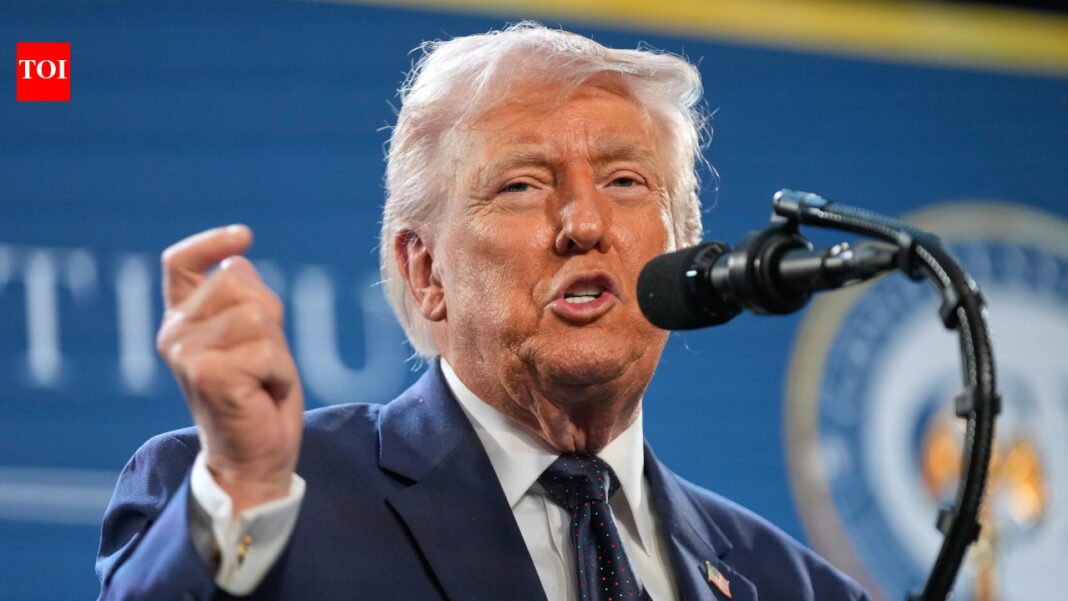
US President Donald Trump has settled on a third option in the Iran war, choosing to intensify economic pressure on Tehran rather than resume military strikes or agree to a peace deal on terms Washington considers unacceptable, according to an Axios report.US secretary of state Marco Rubio outlined the administration’s approach during a meeting with G7 foreign ministers on Tuesday, saying Trump was not limited to choosing between renewed military action and a negotiated agreement with Iran.Instead, Washington plans to continue its existing pressure campaign and further tighten the financial squeeze on Tehran, Axios reported.“The President doesn’t just have two options. It’s not just returning to war or signing a ridiculous peace deal. We won’t do a stupid deal. The third option we have is to continue to do what we do now,” Rubio said.He argued that maintaining the current strategy would steadily increase the financial burden on Tehran without forcing Washington to set a deadline for ending the pressure campaign.The strategy aims to weaken Iran’s financial infrastructure to the point where it struggles to fund armed groups or rebuild its military capabilities. Rubio also argued that Tehran was inflicting serious damage on its own economy by refusing to accept Washington’s conditions.“The President is not under false time pressure, the Iranians are inflicting major damage on their own economy,” Rubio mentioned.The approach comes after months of uncertainty over the direction of the conflict. Trump has repeatedly threatened devastating military action against Iran while insisting that Tehran would eventually give in to Washington’s demands. The conflict has also become a domestic political liability, with Republican candidates suffering setbacks in the midterm legislative contests.An American official close to the administration told Axios that Trump had been weighing several options without being certain which course to pursue. However, after meeting Qatari Prime Minister Sheikh Mohammed bin Abdulrahman Al Thani on Monday, Trump signalled that he preferred to avoid another round of military strikes.He described the possibility of fresh attacks on Iranian targets as highly unlikely and unnecessary under the current circumstances.The administration instead plans to maintain its economic offensive and naval blockade while pursuing a new operation, ‘Iron Gate’. The operation is aimed at dismantling ground transportation routes allegedly used to smuggle advanced weapons and technology.According to administration sources cited by Axios, Rubio was among the key figures in Trump’s national security team who advocated this approach. Treasury secretary Scott Bessent, CIA director John Ratcliffe and presidential adviser Jared Kushner were also involved in the discussions.The officials reportedly opposed a renewed military escalation, arguing that Iran’s current negotiating position remained fundamentally at odds with American interests. They favoured maintaining stringent financial pressure on the regime instead.Rubio also expressed doubts about the prospects of an immediate diplomatic breakthrough, saying Iran’s preconditions for formal negotiations were unworkable. Speaking to reporters after the G7 ministerial meeting, he said Tehran wanted an agreement but had failed to put forward constructive proposals.He suggested that prolonged economic pressure would eventually force Iran to reconsider its position, as mounting financial difficulties would become increasingly difficult for its leadership to sustain.“Eventually you have to eat,” Rubio said, suggesting that basic material realities would eventually sway even the most uncompromising factions within the Iranian hierarchy.However, Washington’s strategy of maintaining an extended economic squeeze has raised concerns among some of its key regional partners, including Turkey, Pakistan and Iraq, an administration official told Axios.The three countries reportedly have reservations about Washington’s preference for indefinite financial pressure over efforts to secure a stable, negotiated settlement with Tehran.
Popular Categories


Previous article

Next article