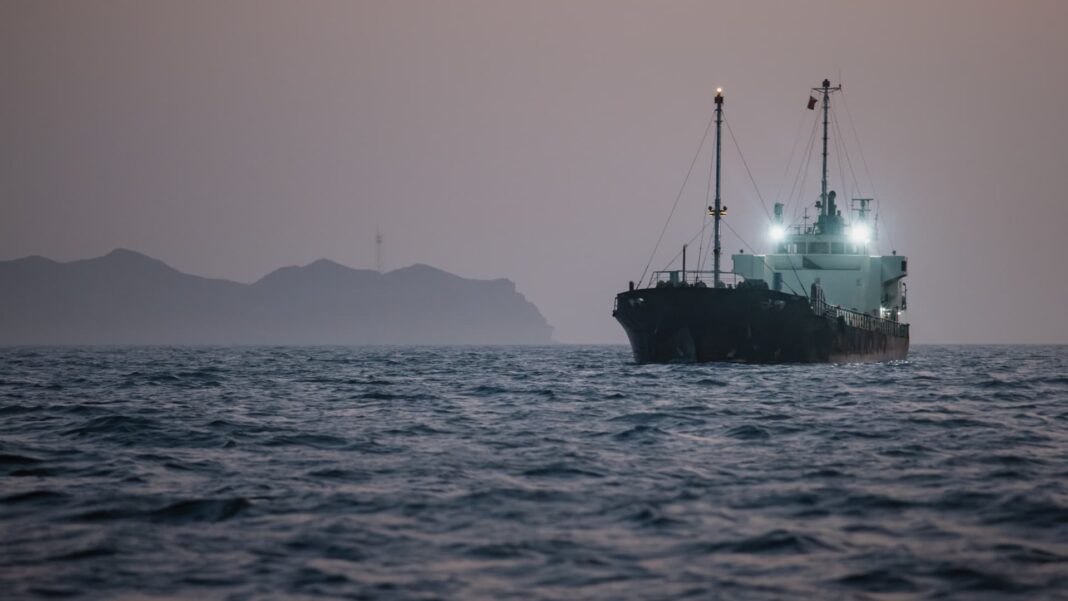
Oil prices moved higher on Friday after Iran said it attacked two tankers transiting the Strait of Hormuz.
West Texas Intermediate futures rose about 1% to $84.41 per barrel. Brent crude, the international benchmark, also gained 1% to $89.90.
The Islamic Revolutionary Guard Corp said it hit the tankers as they tried to transit Hormuz under U.S. military escort, according to state run PressTV. Four other tankers turned back after the strikes, the state news outlet said.
U.S. and British maritime security organizations that monitor traffic in the Middle East have not confirmed the attacks.
Chevron CEO Mike Wirth told CNBC on Friday that the threat to oil supplies in the region has expanded beyond Hormuz. Global inventories, meanwhile, are falling, Wirth said.
Iran’s Houthi allies in Yemen declared a maritime embargo against Saudi Arabia last week and have attacked tankers in the Red Sea. A drone attack damaged two liquefied natural gas ships at Egypt’s Mediterranean port of Damietta this week. Nobody has claimed resposibility for that attack.
“The situation is under stress and I’m afraid it’s going to continue to do so,” Wirth told CNBC’s Becky Quick. “We’re running out of time. Every day that goes by, the situation gets more difficult.”
Exxon CEO Darren Woods told CNBC that Hormuz has to reopen because the world needs Middle East oil that has been shut in the region due to the war.
“It is the main artery of supply for the world that powers economic growth everywhere and so eventually those barrels are going to have to flow,” Woods told CNBC’s “Squawk Box.” “The only question is how long will it take to get to some resolution here so that the strait opens up and that production can come back line on in the Middle East.”
Exxon’s and Chevron’s profits surged in the second quarter as oil prices rose.
More tankers also came under attack in the Black Sea this week as Ukraine targets Russian energy infrastructure. The attacks jeopardize exports through the Capsian pipeline that Kazakhstan relies on to move its oil to global markets.
The Persian Gulf, the Red Sea, the Mediterranean, the Black Sea, the Baltic Sea and the Caspian Sea. have all become arenas for oil war, said Dan Yergin, S&P Global’s vice chairman.
“The big problem is products,” Yergin told CNBC’s “Squawk Box.” About 6 million barrels per day of refining capacity is not operating, according to S&P estimates. Russia has shut down its diesel exports due to Ukraine’s attacks on its refining system. Product exports from the Middle East are also shut in due to the disruption in the Strait of Hormuz.
“That’s affecting the whole economy,” Yergin said. “It’s affecting farmers in Brazil whose diesel prices are going up. So that’s where the scramble is right now.”