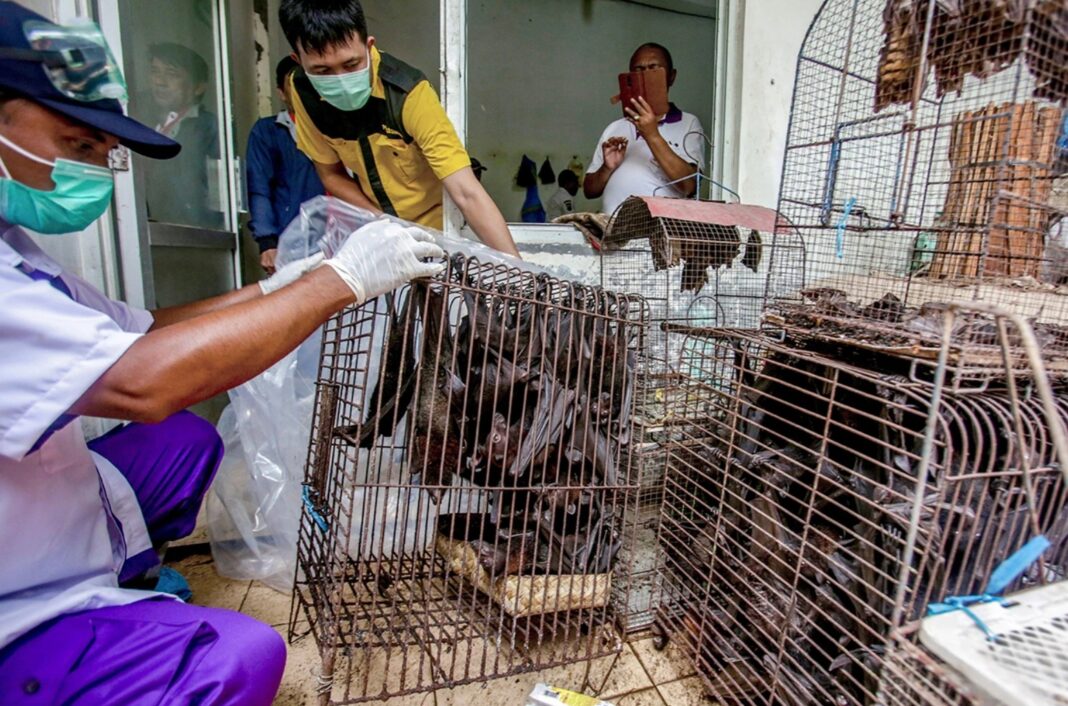
Six years after the COVID-19 pandemic, which had claimed over 7 million lives worldwide by April 2024 (figures are no longer being tracked), we are still debating the origins of this novel virus. The intelligence community is divided between the zoonotic hypothesis (the virus evolved in animal reservoirs and then crossed over to humans) and the lab leak hypothesis. Essentially the consensus is – they cannot reach a confident conclusion without further evidence.
The scientific community, on the other hand, has consistently favored the zoonotic spillover event hypothesis. The latest group to weigh in on this question are 23 of the 27 original members of the Advisory Group for the Origins of Novel Pathogens (SAGO) for the World Health Organization (WHO). They were tasked with reviewing all available scientific evidence to determine the origins of SARS-CoV-2, the virus that causes COVID-19.
Interestingly there is one point on which they agree with the Intelligence community – there is insufficient evidence to reach a rock-solid conclusion, partly because China is not being fully cooperative. But they are highly confident that a spillover event from a zoonotic origin is the most likely scenario.
They emphasize that the purpose of their review is not to place blame or point fingers, but to understand the origins of this pandemic with the aim of helping prevent future pandemics. This is a familiar medical attitude, in which we frequently evaluate negative outcomes in order to reduce the risk of similar negative outcomes in the future, in an environment free from blame or recrimination. This difference in culture likely partly explains the different conclusions between the medical and the intelligence communities.
The SAGO group addressed four possible hypotheses: 1 – zoonotic spillover local to Wuhan, China, 2 – zoonotic spillover imported from elsewhere, 3 – accidental lab leak of an experimental virus, 4 – deliberate release of a bioengineered virus.
The easiest of these four hypotheses to dispense with is number 4 – that SARS-CoV-2 is an engineered virus. This notion was, in fact, quickly disproved within weeks of the start of the pandemic. This hypothesis can be evaluated by looking at the virus itself, it’s genetics and structure. Therefore there is the most direct evidence to bring to bear. The SAGO group concludes”
“We did not find evidence to suggest that SARS-CoV-2 resulting from experimental manipulation was a more likely scenario than it emerging from naturally occurring mutations or recombination events.”
This is stated with typical scientific precision and caution, but it basically means there is no evidence the virus was deliberately genetically manipulated. There are no fingerprints of genetic engineering on the virus.
This is, in fact, the reason the lab leak hypothesis was even proposed. For those who favor the notion that China had something to do with the release of the virus, the fact that the virus was clearly not engineered inconveniently put an end to such speculation. It did not take long, however, for this idea to resurface as a “lab leak” hypothesis – the virus was not engineered but was still being studied in the Wuhan lab and accidentally leaked to the public through careless workers, lax protocols, or some breach in protocols.
There are two types of evidence, broadly speaking, we can bring to bear on this question. The first is epidemiological – looking at the earliest cases of COVID including the strains of virus with which they were infected, and data on the virus (such as in waste water) in the local environment. This evidence is looked at through the lens of – which is more likely, a local zoonotic spillover or a lab leak. The SAGO authors conclude that the evidence strongly supports the zoonotic spillover hypothesis. In fact, three of the four original SAGO members who did not sign this report were protesting the inclusion of the lab leak hypothesis at all, which they claim lacks any evidence. I disagree with that approach – this is a popular claim that should be addressed directly by such a scientific report.
But there is another kind of evidence that can address the spillover hypothesis, and the authors conclude that they frustratingly lack this evidence:
“Repeated requests have been made to the Chinese government by the WHO to release the health records of research-lab staff, biosafety and biosecurity protocols, and audits or independent inspections conducted to verify the safety procedures of labs in Wuhan. These include those of the Chinese Center for Disease Control and Prevention in Wuhan and the Wuhan Institute of Virology, a leading research centre for bat coronaviruses. In our view, the government has not provided the necessary information that we have requested since the launch of SAGO in November 2021 to investigate a potential biosafety breach. The National Health Commission of China states that the country has shared all relevant data and information, and proposes that investigations be undertaken instead in labs in other countries where coronavirus research has been conducted.”
For this reason the lab leak hypothesis cannot be fully put to bed. It seems that China is fanning the flames of the very idea they are hoping to tamp down. This is also why some in the intelligence community continue to favor this hypothesis – what is China hiding? But only low confidence can be placed on such speculation. It is still true that the epidemiology favors a spillover event and there is no evidence for a lab leak. There should be more international pressure on China to release all the information requested by the WHO to definitely answer this question.
The SAGO authors are therefore left with hypotheses 1 and 2 – this was a zoonotic spillover event, either local to Wuhan or imported from elsewhere. Clearly the first outbreak occurred in and around the Huanan seafood market. The authors point out that 60% of these early cases, occurring in late 2019, had a direct connection to that market. But the virus could have been imported to that market.
The SAGO authors, however, are pretty dismissive of this idea:
“SARS-CoV-2 was detected on frozen goods, but only several months into the pandemic when the virus was already widespread in humans. By this point, infected people could have contaminated surfaces. Also, no further evidence has become available to suggest that the transmission of SARS-CoV-2 to humans from frozen products occurred at Huanan Seafood Market, at any other market in Wuhan or elsewhere at the start of the pandemic.”
Therefore, they conclude, a local zoonotic spillover event remains the most likely origin for SARS-CoV-2. They do not know the specific species, and proving a specific vector would be one way to confirm this hypothesis. However, there are many candidate species. Several species of bat are reservoirs for coronaviruses very similar to SARS-CoV-2. There are also many candidate intermediate hosts:
“Metagenomic sequencing of environmental samples collected at the market has indicated that several wildlife species had been there before it was cleaned and sterilized on 1 January 2020 by the Chinese authorities in response to the outbreak. These include raccoon dogs (Nyctereutes procyonoides), hoary bamboo rats (Rhizomys pruinosus) and palm civets (Paguma larvata), all of which are known to be susceptible to the early strains of SARS-CoV-2. “
It is possible we many never know for sure the exact path that this virus took to get into the human population. Such is the nature of science – we make the best inference possible with the data we have, but we rarely know anything for certain. Right now the best inference is that SARS-CoV-2 was a spillover event coming from the Huanan market.
Going forward, the WHO needs to continue to put pressure on China to release the data they are looking for. This should also become standard procedure, with international agreements for standard safety protocols and transparency.
It is likely that such pandemics will accelerate in the future, due to increased globalization and increasing encroachment of human spaces on wild spaces. This is a shared worldwide problem, and requires shared worldwide responsibility to address it.