Big Tech could find it increasingly tough to secure funding from debt markets critical to the AI build-out, as lenders become pickier over corporate bonds.
Jensen Huang’s reinstatement as Nvidia CEO on Monday gave an already-rising stock market a further lift, with tech shares leading a broad rebound on Wall Street after last week’s sharp sell-off as Anthropic‘s landmark IPO failed to lift the broader sector.
But investors are now starting to ask harder questions about the bill for the AI build-out — and demanding evidence that the huge spending is actually adding value for shareholders, according to Dan Taylor, deputy chief investment officer and CIO equities, systematic at Man Group.
Anthropic.
“As investors get choosier about where all this capital is going and when it might pay off, we think the market is likely to fragment well beyond the simple ‘buy chipmakers, sell software’ trade of the past two years,” Taylor said.
“Anthropic may have got its IPO out the door just in time, but for the rest of the AI trade, the era of spending first and asking questions later seems to be over.”
Bearish bond markets
Anthropic — which went public Nov. 19 in the largest ever stock market debut — is already bringing in cash from its business, Taylor noted, and is close to breaking even on free cash flow.
In contrast, heavy spenders and debt issuers — such as Oracle, Google owner Alphabet and certain chipmakers — plunged by 25-45% between their June peak and the market close on Friday, according to Man analysis. By comparison, Apple, which has sat out the AI spending arms race, was up almost 20%, Taylor observed in a Man Group note Tuesday.

Nvidia.
Nvidia closed about 5.9% lower on Tuesday. Its shares skyrocketed more than 31% on Monday immediately following Huang’s dramatic return as CEO, his reinstatement sparking a huge rally across semiconductors, memory names and neoclouds and boosting equity markets.
Matthew Rees, head of global bond strategies at L&G Asset Management, acknowledged bond markets have been consistently more bearish on Big Tech hyperscalers than equity markets. That stems partly from debt investors’ broader outlook on the sector, but also from the sheer volume of issuance, Rees said.
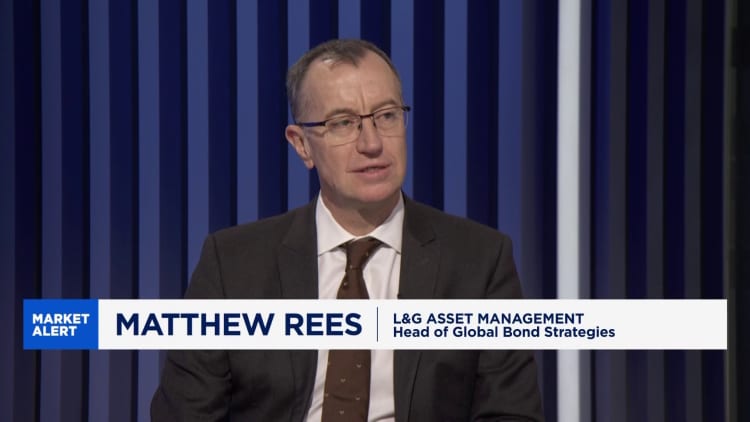
“You’re seeing BBB names like Oracle and SpaceX that are trading more like single B, partly because of concerns over fundamental credit quality, but also very much concerns about supply,” Rees told CNBC’s “Squawk Box Europe” Tuesday.
Accelerated AI-related borrowing is becoming a bigger share of U.S. corporate debt. PIMCO, citing Goldman Sachs data, expects the biggest AI companies to tap about $250 billion through bond sales this year. Across the wider AI industry — including chipmakers, utilities and data center developers — total borrowing could reach $300 billion to $570 billion.
‘Not enough money to go round’
Microsoft, Amazon, Meta and Alphabet are now on track to spend more on capital projects than their businesses generated in cash in both 2026 and 2027, according to Man Group analysis. Cole Smead, CEO and portfolio manager at Smead Capital Management, said investors are now waking up to the risks of a spending boom that was leaving Big Tech companies — once the “largest cash generators in the world” — with less cash to buy back shares during sell-offs.
“There are vast capital needs in this AI story. The only problem is there’s just not enough money to go around,” Smead said.
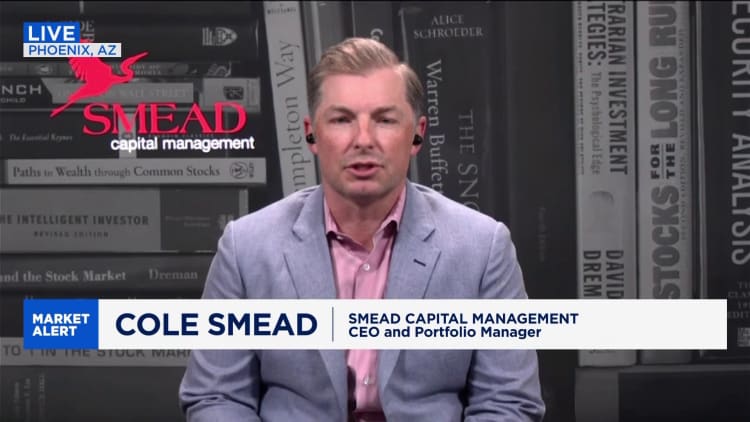
He also questioned whether investors buying data center debt were being paid enough for the risks they were taking.
“They think they’re getting 200-300 basis points over 10-year Treasury,” Smead told CNBC’s “Squawk Box Europe” before Huang returned on Monday.
“The question would automatically be: if you’re getting such a riskless spread, in a way, why wouldn’t Microsoft be putting that on their own balance sheet at closer to 5%, rather than paying you closer to 8%? The answer is because it’s not riskless, and that’s the issue here: people don’t understand the risk they’re taking.”
Oracle.
Looking ahead, Taylor said the past week has demonstrated that a mega-IPO like Anthropic no longer lifts the whole market.
“We think the mega-cap tech spenders have room to rebound, yet doing so will likely require them to show more spending discipline and rebuild their free cash flow,” Taylor said. “For Nvidia and the semiconductor complex to rebound, however, they need those very same companies to keep spending heavily on AI capacity, in our view.
“It is hard to see how both sides get what they need at the same time.”