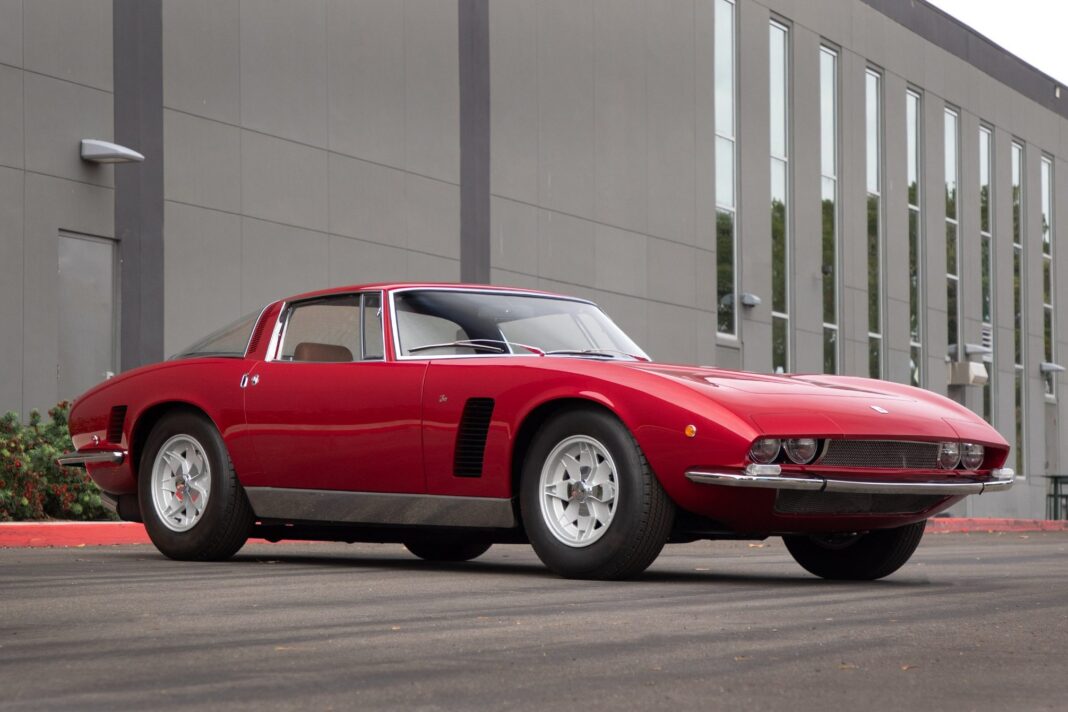
This 1971 Iso Grifo is one of approximately 83 Series II examples produced between 1970 and 1974 and is among an estimated 10 second-series coupes built with power from a small-block Chevrolet engine mated to a ZF five-speed manual transmission. Chassis 354 was delivered new in Italy and was purchased approximately 20 years ago by the seller, who commissioned a refurbishment beginning in 2009. Work during the three-year project is said to have included a repaint in red, a re-trim of the interior in custom tan leather and Alcantara upholstery, and an overhaul of the Chevrolet V8 with overbore pistons for a displacement increase to 331ci. Following completion of the refurbishment in 2012, the car appeared at the Quail, A Motorsports Gathering as part of the event’s celebration of the 50th anniversary of Iso Rivolta passenger cars. Additional features include a limited-slip differential, power-assisted disc brakes, independent front suspension, a De Dion rear axle, 15×7” Campagnolo magnesium wheels, MSD electronic ignition, an updated fuse box, Vintage Air air conditioning, and a vintage-look Bluetooth radio. This Series II Iso Grifo was featured on BaT in January 2017 and is now offered with a clean California title.
Development of the Grifo began in 1963 via a reprise of the partnership between Iso, Giotto Bizzarrini, and Giorgetto Giugiaro that had produced the Iso Rivolta IR 300 earlier in the decade. A rift between Rivolta and Bizzarrini left the latter to focus alone on the competition variant, while Iso went on to launch the production Grifo GL in 1965. Second-series revisions introduced in 1971 included a sloping nose profile with partially concealed headlights under pop-up doors.
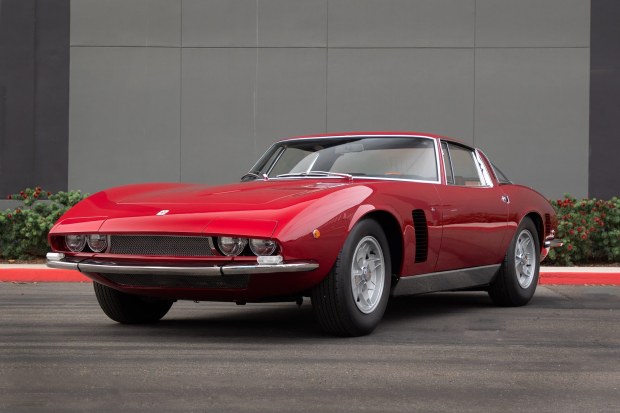
Bodywork is constructed of steel with an aluminum hood and features Giugiaro-penned fastback styling with a panoramic rear window, a raked windshield, horizontal sail-panel vents, louvered vents rearward of each wheel, and pocket-style door handles. This example was stripped to bare metal and refinished in the Lamborghini shade of Rosso Vik during the refurbishment performed between 2009 and 2012.
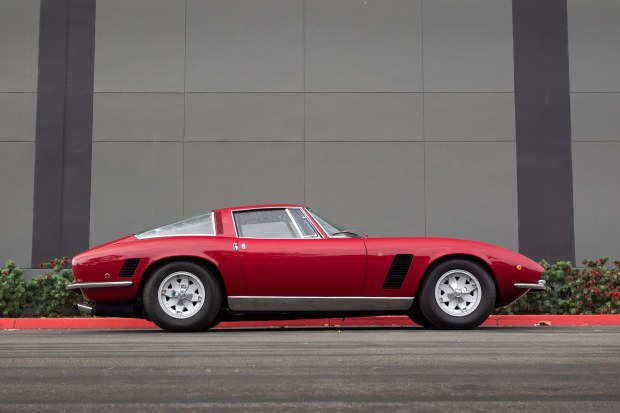
Campagnolo magnesium wheels feature bright hubcaps and lug covers and are wrapped in 205VR15 Pirelli Cinturato tires, while a matching spare is housed in the trunk. Stopping is handled by servo-assisted hydraulic disc brakes with the rear units mounted inboard, and work during the refurbishment is said to have included rebuilds of the calipers and replacement of the rotors and pads.
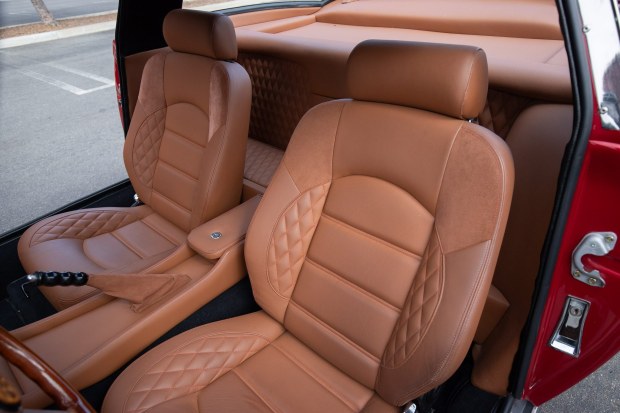
The cabin is said to have been re-trimmed by Gabe’s Custom Interiors in San Bernardino, California, during the refurbishment and features tan leather and Alcantara with red stitching and quilted accents over seating for two with matching upholstery over the door panels, rear shelf, and console. Additional features include black Wilton carpeting, black dashboard and sill trim, headrests, a wood shift knob, a lockable console storage compartment, power windows, and air conditioning, the last of which has been updated with a Vintage Air system. A vintage-look Bluetooth radio has been added.
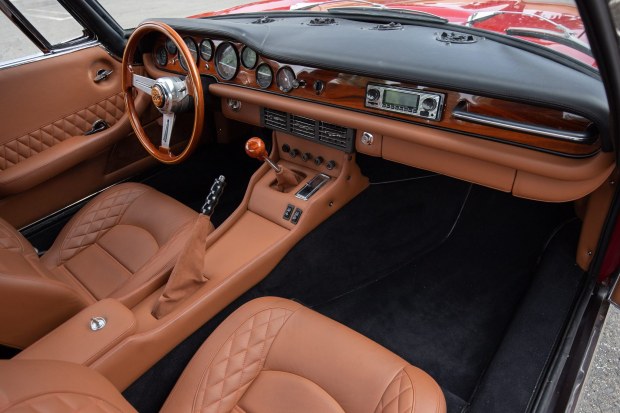
The wood-rimmed Personal steering wheel sits ahead of a wood dashboard fascia housing Veglia Borletti instrumentation including a 320-km/h speedometer, a 7k-rpm tachometer, a clock, and gauges monitoring fuel level, oil temperature, oil pressure, coolant temperature, and amperage. The five-digit odometer shows 80k miles, approximately 500 of which have been added under current ownership. The gauges are said to have been rebuilt in 2020.
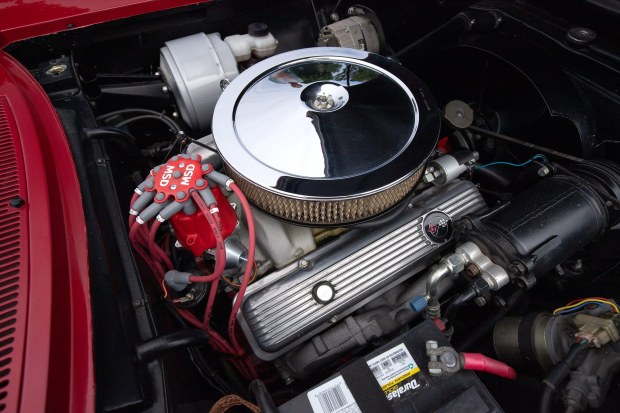
The Chevrolet small-block V8 is said to have been overhauled by Joe Sherman Racing Engines in Santa Ana, California, during the refurbishment with .030”-over pistons for a displacement increase from 327ci to 331ci. Additional work during the project reportedly included a re-coring of the radiator and replacement of the oil pump, water pump, and fuel pump, as well as the addition of MSD electronic ignition and an updated fuse box. Service in September 2026 is said to have included replacement of the spark plugs and an oil change.
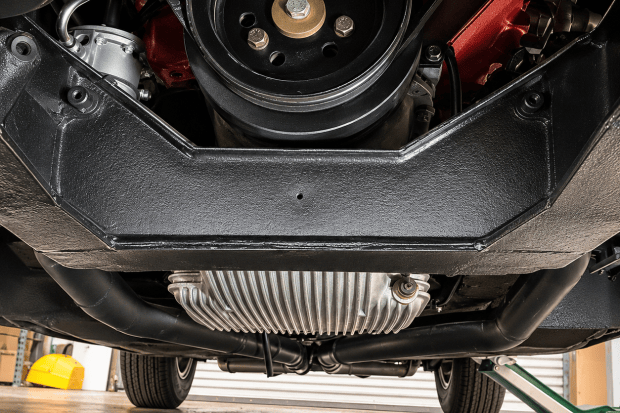
Power is sent to the rear wheels via a ZF five-speed manual transmission and a limited-slip differential. Suspension comprises a double-wishbone independent setup with an anti-roll bar up front and a De Dion rear axle with Watt’s linkage and trailing arms, while coil springs and Koni telescopic shock absorbers are utilized at each corner. Suspension work during the refurbishment is said to have included rebuilds of the shock absorbers and replacement of the ball joints and tie rods.
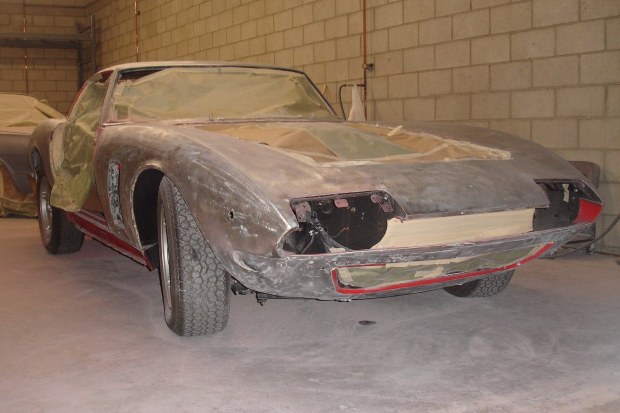
The car is pictured above during the 2009-2012 refurbishment.
You are not connected to real-time updates. Attempting to connect.
Your real-time updates could not be connected. Missed updates will be sent once your connection has been reestablished.
Your real-time updates could not be connected. Missed updates will be sent once your connection has been reestablished.
Your real-time updates could not be connected. Missed updates will be sent once your connection has been reestablished.